About Us
We are a team of scientists and engineers building the AI co-scientist for drug development. We started from one conviction: new medicines deserve a system that can invent and show its work.
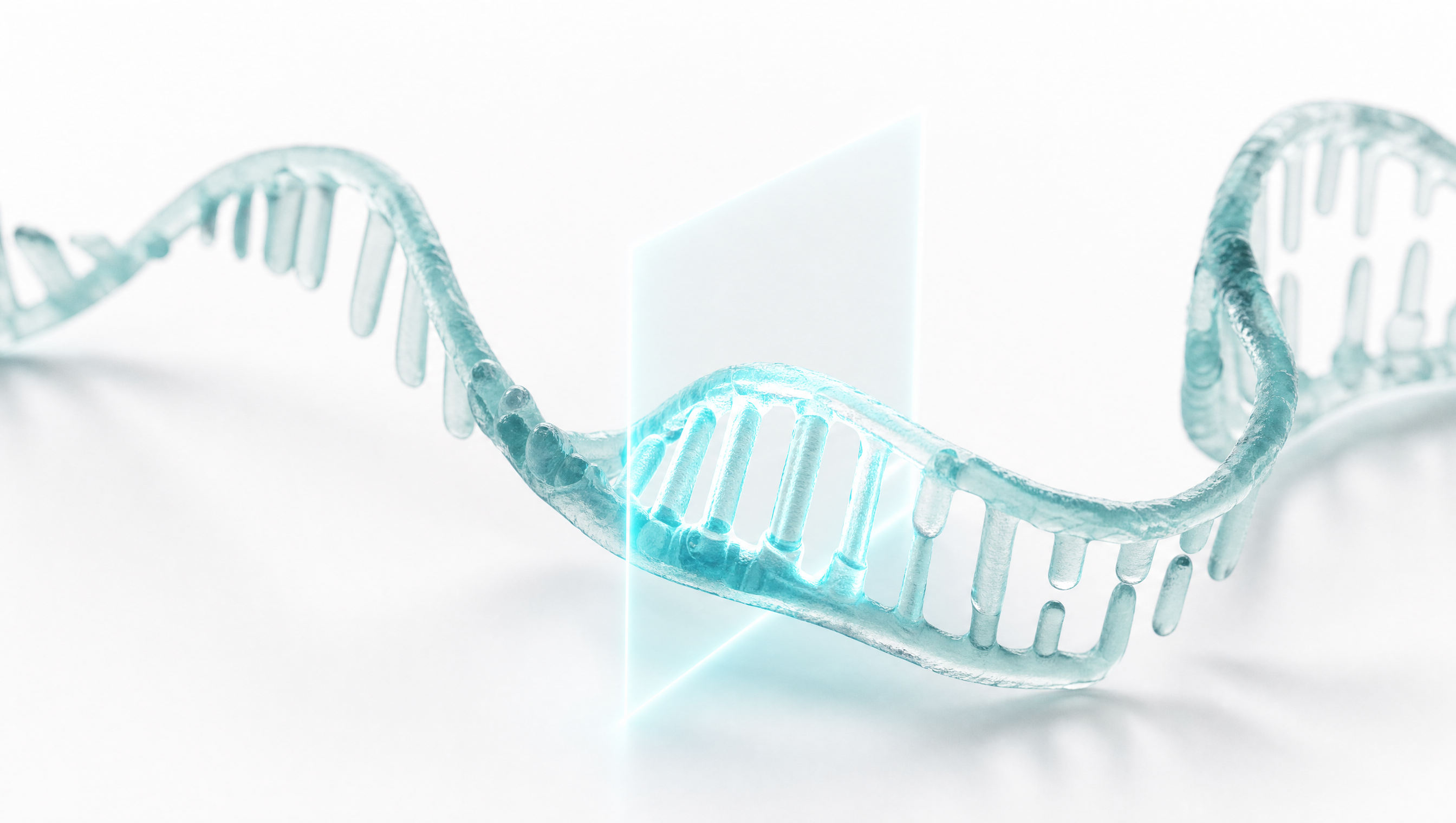 Specimen · mRNA
The mRNA strand: where programmable medicine begins
Specimen · mRNA
The mRNA strand: where programmable medicine begins

A Scientific Harness for drug development
Giving research and pharma teams traceable evidence, explicit uncertainty, and scientist review at every step.
Discover more → 90+ integrated sources · one graph

What we have built
Research and product milestones, with the evidence attached at every step. Market and industry figures are cited context, not our results.
Our vision
For decades, designing a therapeutic has meant intuition, iteration, and waiting. New modalities changed what is possible to build. They did not change how hard it is to know which candidate will work.
Most programs still fail in the clinic. The evidence that might explain why is scattered across literature, assays, structures, and trials that nobody can reason over at once.
What if a system could read all of it (structures, assays, literature, trials), propose something nobody has tried, and tell you exactly why it believes it? That is the co-scientist we are building.
Our approach
We published Equi-mRNA, the first codon-level equivariant mRNA language model: it encodes synonymous-codon symmetries directly in the representation rather than treating codons as arbitrary tokens.
Around it we built a Scientific Harness: an evidence-typed knowledge graph over ninety-plus sources, ML models and scientific tools driven together, and AI review agents that argue the tradeoffs explicitly.
We work with a wet lab at the University of Central Florida, so designs that come out of the co-scientist have somewhere to be tested rather than only scored.
Every recommendation traces back to source data, with its limitations stated and a scientist directing the decision. If a claim cannot be audited, it does not ship. That is the whole discipline.
The open work makes the company easier to evaluate. The operating system is what we build.
What we publish and what we build are different things. The model and the benchmark are open because claims in this field should be checkable. The harness that drives models and tools together, and the evidence-typed graph they reason over, are what we are building as a company.
What drives us
Scientific rigor
We pursue the truth with intellectual honesty and reproducible methods.
Patient first
Every decision is guided by our mission to help patients in need.
Bold innovation
We tackle the hardest problems with creativity and determination.
Meet the team
The scientists and industry leaders building the co-scientist
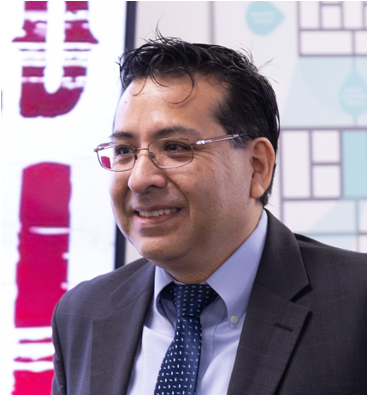
Director of the Complex Adaptive Systems Laboratory at the University of Central Florida. His research spans complex systems, evolutionary computation, network science, and multi-agent systems. He brings that work into the scientific orchestration behind Helixir.
LinkedIn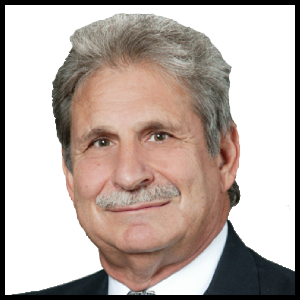
Former CTO of Enterprise Information Systems at Lockheed Martin Corporation and a former CIO in the US Government. He has led large technical organisations where reliability, security, and accountable operations are part of the product. At DeepBio Scientific, he turns that experience toward building the company around the science.
LinkedIn
Co-architect of the Helixir AI, former Head of AWS Research, and CTO of Tag.bio, with more than twenty years across AI and cloud systems. His work connects research models to the infrastructure needed to run them as auditable programs. He shared in the 2025 Breakthrough Prize in Fundamental Physics through the CERN collaboration.
LinkedIn
More than twenty years building and scaling biotechnology companies. His work spans commercialization, partnerships, and the path from a technical result to a program a research organisation can adopt. He leads how DeepBio Scientific brings Helixir into real research workflows.
LinkedInEqui-mRNA was authored by Mehdi Yazdani-Jahromi, Ali Khodabandeh Yalabadi, and Ozlem Ozmen Garibay at the University of Central Florida. Mehdi is a DeepBio Scientific co-founder; the publication page records the institutional relationship without making a separate ownership or licensing claim.